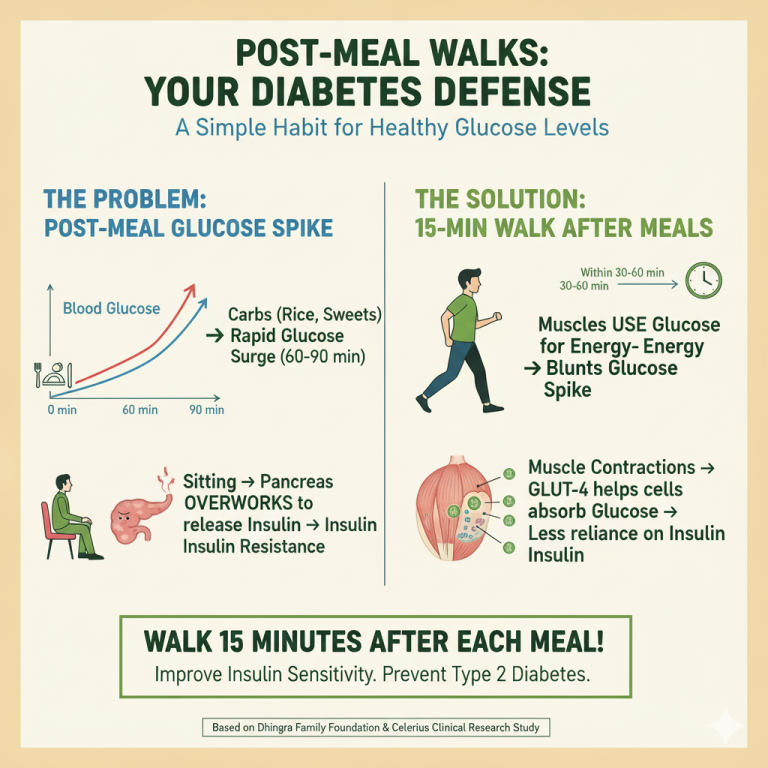
The Dhingra Family Foundation in collaboration with Celerius Clinical Research just completed an observational study assessing the change in glucose over 24-hour period using continuous glucose monitoring device (CGM) for normal and pre-diabetics 50 Asian Indians. As is well known, and we also observed in our study, there was a sharp rise in glucose after sweets, rice and chapaties/naans – sources of carbohydrates in our meals. One simple habit which can minimize risk of developing diabetes is walking just for 15 minutes after each meal within first 30-60 minutes. Why it is important to walk during this time? Blood glucose levels tend to peak 60 to 90 minutes after eating. Walking during this window is ideal for blunting the post-meal glucose surge. As glucose is going up after eating, our pancreas senses it and starts releasing insulin to help glucose enter each cell. If we just keep sitting after a meal, the pancreas must release enough insulin to bring it to pre-meal level. If we walk or do any other exercise, our muscles use glucose from the blood for energy. This action helps clear excess glucose from our blood after a meal and reduces the magnitude of blood sugar spikes. Muscle contractions during walk or exercise stimulate the movement of a glucose transporter (GLUT-4) to the cell surface. This allows our muscles to absorb more glucose from our blood without relying heavily on insulin. Overtime, regular post-meal walks make our body’s cells more responsive to insulin. This allows the hormone to work more effectively at regulating blood glucose levels and can help combat insulin resistance, a key problem which results in progression to type 2 diabetes.
In our study, we observed that about 30% of the subjects were on their way to developing insulin resistance. By making this slight modification in lifestyle, they can improve their insulin resistance and prevent progression to diabetes.
Om Dhingra, Ph.D.